Last updated: August 11, 2026
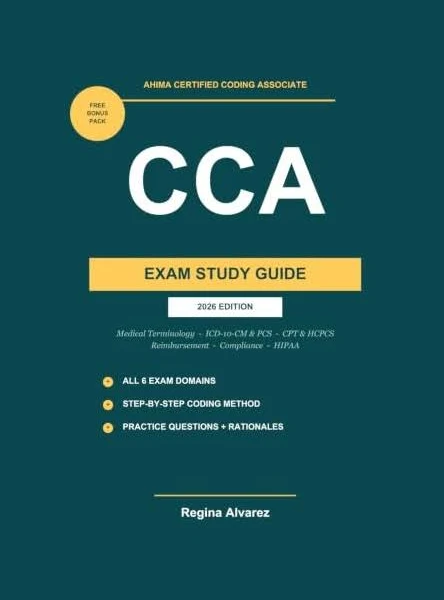
A wrong prep choice can burn 20 to 60 hours. That hurts. Deciding between CCA and CBCS certification prep, the real issue is not “which exam is harder?” It is “which credential fits the job I want, and what should I study so I do not waste time?” This cca cbcs certification prep — complete guide is about choosing the right path, and I write about medical coding and billing because I spend a lot of time sorting exam content, job roles, and study plans for people who need a clean path instead of more confusion. Quick Answer: CCA prep fits coding-focused entry roles, CBCS prep fits billing-and-revenue-cycle entry roles, and the wrong choice can waste 20 to 60 hours of study time when your target job is mismatched.
- CCA prep is the better fit for coding-focused entry work.
- CBCS prep is the better fit for billing, claims, and revenue-cycle work.
- The best study plan mirrors the job you want, not just the credential name.
- Use the official AHIMA and NHA pages to verify current eligibility and exam details.
- When your target role is unclear, read 5 to 10 current job postings before buying prep materials.
- Study order matters: terminology, code rules, and practice first for CCA; workflow, claims, and scenarios first for CBCS.
The Real Difference Between CCA and CBCS Certification Prep
CCA prep and CBCS prep are not interchangeable, and I would not treat them like mirror images. One leans toward coding; the other points toward billing and revenue-cycle work. CCA prep suits people who want a coding-focused start and need proof that they understand basic coding concepts, anatomy, terminology, and code assignment. CBCS prep suits people who want a broader billing-and-revenue-cycle entry point and need to show they can handle claims, reimbursement flow, and front-office-to-payment work.
This split matters because the study plan changes fast once you stop looking at the labels and start looking at the work. CCA prep usually asks for more time in code books, guideline reading, and code selection practice. CBCS prep usually asks for more time on claims, payer rules, collections, compliance, and the business side of patient accounts. Different muscles. Different grind.
A generic post gets this wrong by calling both “entry-level healthcare certifications” and stopping there. That misses the practical choice a reader actually has to make: Do you want a credential that points you toward coding tasks, or one that points you toward billing and revenue-cycle tasks? When you are trying to break into the field, that distinction can decide which job postings you can plausibly target right away.
For people who are still unsure, I would start with the job descriptions, not the exam brochures. When the postings mention diagnosis/procedure coding, code sets, and abstracting, CCA prep is the cleaner match. When they mention claim submission, denial work, patient statements, and payment posting, CBCS prep is the closer match. The prep should mirror the day-to-day role you want, not just the title on the certificate.
For official references, I’d keep two tabs open: the AHIMA CCA credential page and the NHA CBCS certification page. The details on those pages can change, so use them to confirm current eligibility and exam structure before you buy a course or book.
CCA Prep: Who Should Actually Use This (and Who Shouldn’t)

CCA prep wins when your goal is coding entry work, especially when the employer cares about core coding literacy more than broad billing knowledge. I would point new coders, career changers with limited healthcare background, and people who are stronger with rules and code books toward CCA prep first.
The strength of CCA prep is its focus. It tends to train your eye to find the right code, read the question carefully, and avoid the little mistakes that wreck scores: missed modifiers, wrong sequencing, poor anatomy recall, and weak guideline reading. That is useful because coding is detail work. When you do not like slow, exact work, you will feel that pressure in prep and on exam day.
The weakness is just as real. CCA prep can feel narrow when your long-term target is billing, revenue cycle, or a mixed role. You may spend a lot of time on coding concepts and less on the operational side of how claims move, get denied, and get paid. That matters because some employers want more than “can code.” They want someone who can talk through the financial path of a claim.
CCA prep is not my pick for someone who already knows they want patient access, claims follow-up, or billing office work and only wants a quick credential to fit the role. In that case, the study time may be misdirected. I also would not steer a person toward CCA when they hate code books and want a test that stays mostly in billing workflow.
The exact user profile I’d match to CCA prep is this: someone with enough patience to study anatomy, terminology, code sets, and coding guidelines; someone targeting coding assistant, coder trainee, or junior coding roles; someone willing to accept that the first job may be narrower than the long-term goal. That person gets the most value from CCA prep because the exam content maps closely to the work they are trying to enter.
CBCS Prep: The Specific Situations Where It Wins
CBCS prep wins for people who want the billing side of the house, or who need a credential that makes sense in an office where coding is only one piece of the job. When your target role involves claims, reimbursement, patient balances, denials, and payment posting, CBCS prep is the more direct path.
Its strongest point is breadth. CBCS prep usually covers more of the revenue-cycle story, which helps when you are not trying to become a pure coder. That makes it practical for smaller practices, front-office transitions, and entry roles where an employer wants someone who can understand both the patient-facing and insurance-facing sides of the work.
The downside is that breadth can dilute focus. When you want to build a coding-heavy resume, CBCS prep may not give you the same concentrated practice with code selection and guideline nuance that a coding-centered path would. That is not a flaw in the credential; it is a mismatch when your target is not billing.
I would choose CBCS prep when you are the kind of learner who understands systems better than isolated rules. Billing work rewards people who can follow the whole process: registration, eligibility, claim creation, denial management, collections, and documentation follow-up. When that sounds like your lane, CBCS prep is a good use of study time.
I would skip CBCS prep when your employer specifically wants coding-heavy proof or when your job search is aimed at coding departments rather than billing offices. A broad credential is only an advantage when the role values breadth. When it does not, the extra study can become noise.
My specific user profile for CBCS prep is this: someone moving into billing, revenue cycle, or mixed administrative roles; someone who wants a credential that supports office operations as well as reimbursement work; someone who prefers practical workflow study over deep code-book drill. That is the place where CBCS prep earns its keep.
The Honest Side-by-Side

Here is the comparison I would actually use when I were choosing a prep track for a real job search. The winner changes depending on what the role asks you to do, not on which acronym sounds more polished.
| Criteria | CCA Prep | CBCS Prep | Winner for [condition] |
|---|---|---|---|
| Primary skill focus | Coding fundamentals, code selection, guidelines | Billing workflow, claims, reimbursement, office processes | CCA for coding roles |
| Best match for first job | Coding assistant or junior coder paths | Billing specialist, claims, and revenue-cycle entry roles | Depends on target job |
| Study emphasis | Anatomy, terminology, code books, sequencing | Claims, denials, payment flow, payer rules | Depends on your weak spot |
| Breadth of job relevance | Narrower, more coding-centered | Broader, more administrative and financial | CBCS for mixed roles |
| Risk of feeling overwhelmed | Higher when you dislike code-book detail | Higher when you dislike business/process material | Depends on learning style |
| Employer signal | “This person is focused on coding basics” | “This person understands billing operations” | Depends on department |
| Transition value from another role | Strong for admin staff moving into coding | Strong for front-office staff moving into billing | Depends on background |
| Long-term specialization path | Good base for coding specialization | Good base for billing/revenue-cycle specialization | Depends on career plan |
| Prep efficiency | Best when you already like coding concepts | Best when you already know billing workflows | Depends on existing experience |
The main thing this table shows is that neither prep path is “better” in a vacuum. Each one wins when it matches the work you are trying to do. That sounds simple, but a lot of bad advice ignores it and pushes one credential as a universal answer. There is no universal answer here.
Another point the table makes clear: the strongest prep strategy is not “study everything.” It is “study the part you will actually be tested on, and the part your target job uses every day.” That is where most people save time and improve confidence. They stop trying to become both a coder and a biller in one sprint.
When you already know the target role, the comparison becomes less about prestige and more about fit. CCA prep fits a coding track. CBCS prep fits a billing or revenue-cycle track. The right choice is the one that gets you a believable resume for the role you want next.
Our Verdict: Which One to Choose and Why
Choose CCA when you want coding-focused entry work and you are ready to spend most of your prep time on code books, guidelines, anatomy, and terminology. Choose CBCS when you want billing or revenue-cycle entry work and you need a credential that speaks to claims, reimbursement, denials, and office workflow. Neither when you have not decided which job you want, because studying the wrong track will waste time and leave you with a certificate that does not match your search.
That is the cleanest call I can make. When your target job title includes coding, CCA prep is the stronger bet. When your target job title includes billing, claims, or revenue cycle, CBCS prep is the smarter bet. I would not choose based on which exam sounds easier, because “easier” can turn into “less useful” very quickly once you start applying for jobs.
The other reason I make this call is practical: employers tend to care more about whether your training matches the work than whether you collected a credential in the abstract. A certificate that lines up with the posting helps you speak the same language as the hiring manager. That is the whole game.
The honest trade-off is that neither path gives you everything. CCA can leave billing newcomers underprepared for workflow questions. CBCS can leave coding-focused applicants lighter on code practice. You are choosing emphasis, not perfection.
When to Reconsider This Choice Entirely
There are a few cases where I would tell you not to pick either prep path yet.
First, when you are not sure you want healthcare administration at all, stop and test the job market before studying. A credential is useful when it supports a direction. Without one, prep turns into busywork.
Second, when your goal is a specialty role that needs a different credential entirely, do not force one of these into the wrong slot. For example, when the role you want is clearly on the compliance, auditing, or advanced coding side, you may need a different path than basic entry prep. Check the employer’s preferred credential before you commit.
Third, when you are already working in an office and only need a small skill upgrade, a full certification prep course may be more than you need. In that case, a targeted refresher on claims, coding, or documentation might help more than a broad certification plan.
Fourth, when you cannot realistically study the material tied to your chosen path, that matters more than preference. Someone who hates code books should not force CCA prep. Someone who finds claims and reimbursement mind-numbing should not force CBCS prep. Fit matters because persistence matters.
This is the section most generic posts skip, and it is the one that saves people the most regret. Not every learner should buy a prep course first. Sometimes the right move is to clarify the job target, talk to a hiring manager, or read current postings before paying for anything.
How I Would Build a Prep Plan for Each Path
For CCA prep, I would build the plan around repetition and code-book confidence. Start with anatomy and terminology so you are not guessing on body systems later. Then move into coding conventions, guidelines, and practice questions. Spend real time on why an answer is wrong, not just why the right answer is right. CCA prep rewards precision, and precision comes from correction.
I would also make the study sessions shorter and more frequent. Coding work punishes fatigue. A tired reader misreads details, skips words, and misses modifiers. That is not a moral failure; it is how detail-heavy work behaves. When you can, train yourself to slow down on purpose.
For CBCS prep, I would build the plan around workflow. Map the path from appointment to claim to payment to denial to follow-up. Learn the reasons claims fail, the common points where billing breaks down, and the office tasks that keep money moving. That gives the material shape. When you only memorize terms, CBCS prep can feel abstract. When you tie it to the billing cycle, it starts to make sense.
I would also practice with scenario questions. Billing is rarely a one-step answer. One claim can involve eligibility, coding accuracy, documentation, patient responsibility, and payer rules all at once. The prep should teach you to read the whole picture instead of hunting for a single keyword.
For both paths, use the official exam page early so you know the current content outline and any policy details. The AHIMA and NHA pages can help confirm what the exam expects before you spend money on a course or book. That is boring advice, but it prevents avoidable mistakes.
What Generic Prep Advice Gets Wrong
A lot of generic prep advice tells you to “study consistently” and “practice regularly.” That is true, but uselessly broad. The real issue is study order.
For CCA prep, the order should usually go from terminology and anatomy to code rules and then to timed practice. When you jump into questions too early, you may learn tricks without understanding why they work. That can stall you later.
For CBCS prep, the order should usually go from billing workflow to claims problems to payer and reimbursement concepts, then to practice scenarios. When you start with isolated definitions, the material can feel like flashcards with no story behind them. People forget those fast.
Generic advice also tends to ignore fatigue and relevance. CCA prep can be mentally sharp-edged. CBCS prep can be process-heavy. Those are different kinds of strain, so the fix is different. One person may need shorter sessions and more breaks. Another may need whiteboard diagrams of the billing cycle. The prep should respond to the material, not just the calendar.
And one more thing: a lot of posts act as if the exam is the finish line. It is not. The real goal is to become credible in the job you want. When the prep does not build usable skills for that job, the credential will not carry as far as you hope.
FAQ
Which is better for a beginner, CCA or CBCS?
When you mean “better for coding jobs,” CCA. When you mean “better for billing or revenue-cycle jobs,” CBCS. The beginner question only makes sense once you name the job.
Can I use CBCS prep if I want to become a coder later?
Yes, but I would treat it as a billing-first path, not a coding-first path. It can help you understand the revenue side of healthcare, but it is not the same as focused coding prep. When you want a coding job, talk with a career advisor or hiring manager before you assume the path will transfer cleanly.
Is CCA prep enough to get hired?
It can help, but hiring depends on the job, your experience, and how well your skills match the role. A credential helps most when it lines up with the posting and your practice work.
How long should I study?
Long enough to be accurate, not just familiar. When you are missing questions because of weak terminology, code rules, or workflow understanding, keep going. The right timeline depends on your background and target role, and many learners need 4 to 12 weeks of focused review rather than a last-minute cram.
Should I buy a course or study on my own?
Use the method you will actually finish. A course can help when you need structure, but self-study can work when you are disciplined and use official exam outlines, practice questions, and the right books.